Close Menu
  • FDA
  • Conferences
    • AACR
    • ASBRS
    • ASCO
    • SABCS
    • ASH
    • ESMO
    • MOASC
    • Upcoming Oncology Conferences
  • Cancers
    • Breast Cancer
    • Prostate Cancer Treatment
    • Lung Cancer Treatment
    • Gastrointestinal Cancer Treatment
    • Melanoma Skin Cancer Treatment
    • Non-Hodgkin Lymphoma
    • Kidney
    • Acute Lymphoblastic Leukemia
    • Acute Myelogenous Leukemia
    • Bone Metastases
    • Brain
    • Business Management
    • Cervical
    • Chronic Lymphocytic Leukemia
    • Chronic Myelogenous Leukemia
    • Colorectal
    • COVID-19
    • General
    • Genitourinary
    • Head and Neck
    • Help
    • Hematologic Malignancies
    • Hodgkin Lymphoma
    • Imaging
    • Immunotherapy
    • Liver
    • Lymphoma
    • Multiple Myeloma
    • Myeloproliferative Disease
    • News
    • Non-Small Cell Lung Cancer
    • Other
    • Ovarian
    • Pancreatic
    • Patient Resources
    • Pediatric
    • Sarcoma
    • Sickle Cell
    • Small Cell Lung Cancer
    • Supportive Care
    • Testicular
    • Urology
    • Uterine
  • About
  • Contact
  • Advertise
    • Advertising & Services – Media Kit 2025 OncologyTube.com
    • Oncology Press Release Distribution
Advertisement
X (Twitter) LinkedIn Facebook
X (Twitter) LinkedIn Facebook YouTube
OncologyTube
  • FDA
  • Conferences
    • AACR
    • ASBRS
    • ASCO
    • SABCS
    • ASH
    • ESMO
    • MOASC
    • Upcoming Oncology Conferences
  • Cancers
    • Breast Cancer
    • Prostate Cancer Treatment
    • Lung Cancer Treatment
    • Gastrointestinal Cancer Treatment
    • Melanoma Skin Cancer Treatment
    • Non-Hodgkin Lymphoma
    • Kidney
    • Acute Lymphoblastic Leukemia
    • Acute Myelogenous Leukemia
    • Bone Metastases
    • Brain
    • Business Management
    • Cervical
    • Chronic Lymphocytic Leukemia
    • Chronic Myelogenous Leukemia
    • Colorectal
    • COVID-19
    • General
    • Genitourinary
    • Head and Neck
    • Help
    • Hematologic Malignancies
    • Hodgkin Lymphoma
    • Imaging
    • Immunotherapy
    • Liver
    • Lymphoma
    • Multiple Myeloma
    • Myeloproliferative Disease
    • News
    • Non-Small Cell Lung Cancer
    • Other
    • Ovarian
    • Pancreatic
    • Patient Resources
    • Pediatric
    • Sarcoma
    • Sickle Cell
    • Small Cell Lung Cancer
    • Supportive Care
    • Testicular
    • Urology
    • Uterine
  • About
  • Contact
  • Advertise
    • Advertising & Services – Media Kit 2025 OncologyTube.com
    • Oncology Press Release Distribution
Subscribe
OncologyTube
Home » Icahn School of Medicine » Rusfertide: A New Horizon in Polycythemia Vera Treatment?
Hematologic Malignancies

Rusfertide: A New Horizon in Polycythemia Vera Treatment?

EditorBy EditorFebruary 27, 2024Updated:February 28, 2024No Comments7 Mins Read
Twitter LinkedIn Facebook Email
Rusfertide: A New Horizon in Polycythemia Vera Treatment?
"Rusfertide appears to represent a significant step forward in treating polycythemia vera through its unique approach of limiting the amount of iron available for blood cell production," states Marina Kremyanskaya, MD, Ph.D., Associate Professor of Medicine (Hematology and Medical Oncology) from the Icahn Mount Sinai and lead author of the study.
Share
Twitter LinkedIn Facebook Email

Ask about FDA oncology approvals, clinical trials, and treatment guidelines.

The battle against polycythemia vera (PV), a rare and chronic form of blood cancer, has seen a transformative advancement with the introduction of rusfertide, a groundbreaking drug developed through the collaborative efforts of the Icahn School of Medicine at Mount Sinai. This innovative therapy has shown promising early success in clinical trials, heralding a potential paradigm shift in the management of PV, a condition that has historically been challenging to treat effectively.

“Rusfertide appears to represent a significant step forward in treating polycythemia vera through its unique approach of limiting the amount of iron available for blood cell production,” states Marina Kremyanskaya, MD, Ph.D., Associate Professor of Medicine (Hematology and Medical Oncology) from the Icahn Mount Sinai and lead author of the study.

Understanding Polycythemia Vera

Polycythemia vera stands out as a myeloproliferative neoplasm characterized by the bone marrow’s overproduction of red blood cells. This excess thickens the blood, escalating the risk of serious complications such as heart attacks, strokes, and thrombotic events. Annually, PV affects approximately 1–3 individuals per 100,000 in the United States, presenting severe symptoms that significantly impair the quality of life for patients.

The Challenges of Current Treatments

Traditionally, therapeutic phlebotomy has been the cornerstone of PV management, aiming to reduce the blood’s red cell mass. However, this method, while effective, demands frequent and prolonged medical interventions, exacerbating iron deficiency and contributing to a cycle of iron overload secondary to the condition itself. Consequently, the medical community has been in urgent pursuit of alternative treatments that can offer relief without the burdens associated with phlebotomy and cytoreductive therapy.

Revolutionizing PV Treatment with Rusfertide treatment

The REVIVE study, a phase 2 trial spearheaded by the Icahn School of Medicine at Mount Sinai and spanning 16 centers across the United States and India, explored the efficacy and safety of rusfertide in patients with phlebotomy-dependent polycythemia vera. Rusfertide, an injectable peptide mimetic, functions as a hepcidin mimetic, effectively reducing systemic iron availability and, by extension, red blood cell production. This mechanism of action presents a novel approach to managing PV by directly addressing the disease’s underlying pathology rather than its symptoms alone.

Statistically significant improvement findings from the REVIVE Trial

Over a 28-week treatment period, rusfertide demonstrated a statistically significant improvement in controlling the overproduction of red blood cells, a hallmark of PV. This rusfertide treatment not only offered an alternative to therapeutic phlebotomy but also showed potential in alleviating the debilitating symptoms associated with PV, such as pruritus, fatigue, and night sweats, thus improving patients’ overall quality of life.

The Promise of Rusfertide

“Rusfertide represents a significant advancement in the treatment of polycythemia vera,” remarked Marina Kremyanskaya, MD, Ph.D., a leading figure in the study and an Associate Professor of Medicine at the Icahn School of Medicine at Mount Sinai. The drug’s unique capability to limit iron availability for blood cell production could revolutionize PV management, offering a more effective and less invasive treatment alternative.

This pioneering research was made possible through the collaboration of esteemed colleagues at Mount Sinai, including Ronald Hoffman, MD, and Yelena Ginzburg, MD, whose contributions were instrumental in translating preclinical findings into potential clinical applications.

Looking Ahead: The Future of PV Treatment

The success of the phase 2 REVIVE trial has set the stage for a global phase 3 clinical trial, with Mount Sinai continuing to play a pivotal role. This next phase will further assess rusfertide’s safety and efficacy, bringing us closer to establishing a new standard of care for patients with polycythemia vera.

As the world of medicine eagerly anticipates the outcomes of ongoing and future studies, rusfertide shines as a beacon of hope for those affected by PV. By targeting the disease’s root causes rather than merely managing its symptoms, rusfertide promises to significantly enhance the lives of patients, marking the dawn of a new era in the fight against this challenging blood cancer.

Another Recent Study: Rusfertide (PTG-300) A Breakthrough in Polycythemia Vera Treatment from ASH 2022 [VIDEO Srdan Verstovsek, MD]

…

At the American Society of Hematology (ASH) 2022, Dr. Srdan Verstovsek, a renowned hematologist-oncologist from MD Anderson Cancer Center, presented compelling findings from the Verify Phase 3 clinical trial of PTG-300, marking a pivotal moment in the treatment of polycythemia vera (PV) and other myeloproliferative neoplasms (MPN).

The Role of Calreticulin Mutation in MPN

The mutated calreticulin protein, when bound to the MPL receptor—a receptor for the thrombopoietin growth factor—activates an intercellular signaling pathway that contributes to the disease’s pathology. This discovery has opened new avenues for developing therapies specifically targeting these molecular mechanisms, potentially offering a more focused approach to treatment.

PTG-300 and Its Mechanism of Action

PTG-300, an injectable peptide mimicking the action of hepcidin, the master iron regulatory hormone, represents a novel approach to treating PV. By mimicking hepcidin, PTG-300 aims to regulate systemic iron homeostasis, reducing iron availability for red blood cell production and addressing the root cause of the disease.

Verify Phase 3 Clinical Trial Outcomes

The PTG-300 Verify phase 3 clinical trial demonstrated promising results, showcasing the drug’s potential to specifically target and possibly eliminate malignant cells in patients with calreticulin mutations. Preliminary findings in animal models have shown effective inhibition of the signaling through the MPL receptor, leading to a decrease in the number of cells affected by the mutation. These results provide a strong foundation for the anticipated clinical study targeting patients with advanced ET or myelofibrosis, scheduled to open in 2023.

Addressing Common Questions and Future Directions

The ASH presentation by Dr. Verstovsek addressed the most common question from healthcare professionals: “When can I have it for my patients?” Highlighting the limitations of current treatments, which mainly control symptoms without offering a cure, the introduction of PTG-300 represents a significant advancement with the potential to change the standard of care for PV and related conditions.

The Next Steps for PTG-300 Research

Transitioning from preclinical to clinical work is the next critical step for PTG-300 research. Ensuring the safety of the antibody in advanced myelofibrosis patients will pave the way for its application in earlier stages of the disease, where it holds the most promise for clinical benefit. This approach underscores the need for cautious optimization of treatment efficacy, targeting the best patient population for successful outcomes.

Conclusion: A New Era in MPN Treatment

The development of PTG-300 signifies the beginning of a new era in the molecularly targeted therapy of myeloproliferative neoplasms. By exploring the biology of these diseases more deeply and leveraging the understanding of specific mutations like calreticulin, researchers are on the brink of offering new, more effective treatments. Dr. Verstovsek’s presentation at ASH 2022 not only showcases the potential of PTG-300 but also inspires hope for the future of MPN treatment, encouraging further research and collaboration within the medical community.

About Dr. Srdan Verstovsek

Dr. Srdan Verstovsek’s contributions to the field of MPN research have been widely recognized, earning him international acclaim and numerous awards. His leadership in the largest MPN Clinical Research Center worldwide and his role in overseeing pivotal clinical trials, including those for PTG-300, highlight his commitment to advancing patient care through innovative treatment options.

References and Links:

A Mount Sinai-Led Study Shows Early Success of a Novel Drug in Treating a Rare and Chronic Blood Cancer:

Study shows early success of a novel drug in treating a rare and chronic blood cancer: https://medicalxpress-com.cdn.ampproject.org/v/s/medicalxpress.com/news/2024-02-early-success-drug-rare-chronic.amp?amp_js_v=0.1&amp_gsa=1#webview=1&cap=swipe

Icahn School of Medicine Marina Kremyanskaya MPN Phaase 3 Phase 2 Rusfertide
Follow on X (Twitter) Follow on LinkedIn Follow on Facebook Follow on Google News
Share. Twitter LinkedIn Facebook Email

Related Posts

Dr. Joshua G. Cohen, MD, City of Hope - 2026 Cancer Breakthroughs at MOASC Summit

2026 Cancer Breakthroughs: Dr. Joshua Cohen’s Top Takeaways from the MOASC Summit

Breast Cancer 4 Mins Read
Belantamab Mafodotin Comeback & Myeloma Trends 2026 with Dr. Amrita Krishnan at MOASC

Belantamab Comeback & Myeloma Trends 2026: Dr. Krishnan

Multiple Myeloma 4 Mins Read
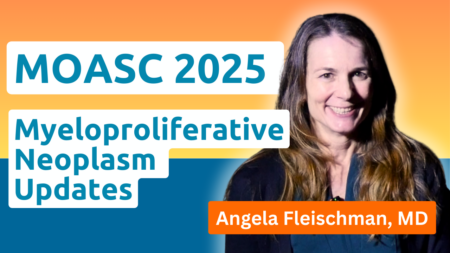
Dr. Angela Fleischman, MD, hematologist at UCI Health, discussing myelofibrosis and INCA033989 treatment updates at MOASC 2025

Promising Advances in Myelofibrosis: Dr. Angela Fleischman’s Take on INCA033989

ASH 4 Mins Read
Connect With Us on Social
  • Facebook
  • Twitter
  • LinkedIn
  • YouTube

Latest FDA Oncology Updates

Accepted for Review Oncology Press Release

FDA Accepts NDA for TLX101-Px (Pixclara®) - PR Newswire

FDA Accepts NDA for TLX101-Px (Pixclara®). (PRNewsfoto/Telix Pharmaceuticals ... cancer), and has assigned a PDUFA goal date of September 11, 2026 ...

Filed: Sep 11, 2026 View source on FDA.gov →
ODAC Meeting Oncology FDA ODAC

April 30, 2026: Meeting of the Oncologic Drugs Advisory Committee

Event Title. April 30, 2026: Meeting of the Oncologic Drugs Advisory Committee Meeting Announcement. April 30, 2026 · On This Page · Agenda · Meeting Materials.

Meeting: Apr 30, 2026 View source on FDA.gov →
PDUFA Date Oncology Press Release

Savara Announces the U.S. Food & Drug Administration (FDA) Has ...

Such statements include, but are not limited to, statements related to the target PDUFA action date. Savara may not actually achieve any of the matters ...

View source on FDA.gov →
Approval Heme FDA OCE

FDA approves nivolumab with chemotherapy for Hodgkin lymphoma

This review was conducted under Project Orbis, an initiative of the FDA Oncology Center of Excellence. Project Orbis provides a framework for concurrent ...

View source on FDA.gov →
News Oncology FDA OCE

FDA Oncology Center of Excellence Presents Conversations on ...

FDA Oncology Center of Excellence Presents Conversations on Cancer: Oncology Nurses - Frontliners in Oncology May 6, 2026.

View source on FDA.gov →
News Oncology FDA OCE

FDA Schedules Public Meeting on the Commissioner's National ...

... Oncology Center of Excellence, as well as a presiding officer. Requests to speak are due by April 24 at 11:59 p.m. The FDA is also soliciting written ...

View source on FDA.gov →
Approval GYN FDA.gov

FDA approves relacorilant with nab-paclitaxel for platinum-resistant epithelial ovarian, fallopian tube, or primary peritoneal cancer

On March 25, 2026, the Food and Drug Administration approved relacorilant (Lifyorli, Corcept Therapeutics Inc.), a glucocorticoid receptor antagonist, in combination with nab-paclitaxel for the treatment of adults with platinum-resistant epithelial ovarian, fallopian tube, or primary peritoneal cancer who have received one to three prior systemic treatment regimens, at least one of which included bevacizumab.

Approved: Mar 25, 2026 View source on FDA.gov →
Approval Heme FDA.gov

FDA approves nivolumab with chemotherapy for previously untreated Hodgkin lymphoma

On March 20, 2026, the Food and Drug Administration approved nivolumab (Opdivo, Bristol Myers Squibb Company) with doxorubicin, vinblastine, and dacarbazine (AVD) for adult and pediatric patients 12 years and older with previously untreated, Stage III or IV classical Hodgkin lymphoma (cHL).

Approved: Mar 20, 2026 View source on FDA.gov →
Recent Posts
  • Does QHS-5132 Signal a Biomarker-Agnostic Shift in Ovarian Cancer Treatment?
  • Is Alisertib the New Standard for Overcoming Resistance in KRAS G12C-Mutant NSCLC?
  • Can Zoldonrasib Redefine Treatment for KRAS G12D NSCLC?
  • Are We Under-Treating PE in Cancer Patients?
  • Is MammaPrint High Risk the New Standard for Guiding Immunotherapy?
X (Twitter) LinkedIn Facebook YouTube
  • FDA
  • Conferences
    • AACR
    • ASBRS
    • ASCO
    • SABCS
    • ASH
    • ESMO
    • MOASC
    • Upcoming Oncology Conferences
  • Cancers
    • Breast Cancer
    • Prostate Cancer Treatment
    • Lung Cancer Treatment
    • Gastrointestinal Cancer Treatment
    • Melanoma Skin Cancer Treatment
    • Non-Hodgkin Lymphoma
    • Kidney
    • Acute Lymphoblastic Leukemia
    • Acute Myelogenous Leukemia
    • Bone Metastases
    • Brain
    • Business Management
    • Cervical
    • Chronic Lymphocytic Leukemia
    • Chronic Myelogenous Leukemia
    • Colorectal
    • COVID-19
    • General
    • Genitourinary
    • Head and Neck
    • Help
    • Hematologic Malignancies
    • Hodgkin Lymphoma
    • Imaging
    • Immunotherapy
    • Liver
    • Lymphoma
    • Multiple Myeloma
    • Myeloproliferative Disease
    • News
    • Non-Small Cell Lung Cancer
    • Other
    • Ovarian
    • Pancreatic
    • Patient Resources
    • Pediatric
    • Sarcoma
    • Sickle Cell
    • Small Cell Lung Cancer
    • Supportive Care
    • Testicular
    • Urology
    • Uterine
  • About
  • Contact
  • Advertise
    • Advertising & Services – Media Kit 2025 OncologyTube.com
    • Oncology Press Release Distribution
© 2026 Copyright Protected Medicus Networks, Inc. Privacy Policy

Type above and press Enter to search. Press Esc to cancel.