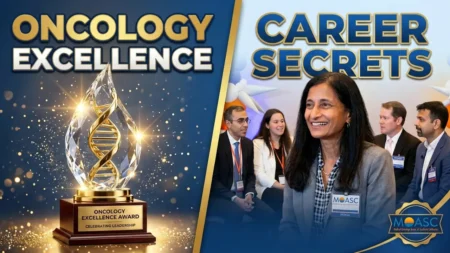

Watch the Exclusive Video Interview Live from the MOASC 2026 Annual Meeting with Dr. Amrita Krishnan, Director of the Judy and Bernard Briskin Center for Myeloma at City of Hope. In this interview, Dr. Krishnan discusses myeloma trends 2026 and what clinicians and patients should know.
In this high-impact interview, Dr. Amrita Krishnan breaks down the most important myeloma trends 2026, with special focus on the dramatic resurgence of belantamab mafodotin and the rapid movement of bispecific therapies into earlier lines of treatment.
Belantamab Mafodotin: The Dramatic Comeback in 2026
One of the biggest stories in multiple myeloma this year is the return of belantamab mafodotin (Blenrep). Approved in October 2025 based on the DREAMM-7 study, belantamab combined with bortezomib and dexamethasone delivered high response rates (~80%) and deep MRD-negative responses in relapsed/refractory patients.
Dr. Krishnan highlighted its potential role even in early relapse settings:
“So it suggests that Balantomab does have a role in an early relapse for selected patients.” — Dr. Amrita Krishnan, MD, City of Hope (MOASC 2026)
New Phase 2 data on optimized, lower-intensity dosing (1.9 mg/kg every 8 weeks) show preserved efficacy (ORR 66%) with significantly reduced ocular toxicity — only 5% grade 3 keratopathy — making the drug far more usable in daily practice.
Bispecifics Moving into Earlier Lines of Therapy
Dr. Krishnan expressed strong excitement about bispecific antibodies advancing earlier in the treatment journey, particularly the MajesTEC-3 trial results of teclistamab plus daratumumab.
“We’re very excited based on the results from the Majestic Three trial which was the combination of Tlyomap plus Datuma map… unprecedented results in terms of progression free survival not reached, and an overall survival benefit compared to standard therapy.” — Dr. Amrita Krishnan, MD, City of Hope (MOASC 2026)
This combination is now positioned as a powerful option even at the time of first relapse.
Emerging Trispecific Antibodies and In Vivo CAR-T
Dr. Krishnan also spotlighted next-generation trispecific antibodies such as JNJ-5322 (targeting BCMA, GPRC5D, and CD3), which demonstrated 100% response rates in BCMA-naïve patients and a manageable safety profile.
Another major myeloma trend 2026 is the development of in vivo CAR-T therapies (e.g., In Vivocarti). These “off-the-shelf” approaches eliminate the need for T-cell collection, manufacturing delays, and lymphodepletion chemotherapy.
“In Vivocarti has the advantage of being a quote unquote, off the shelf auction, so you don’t have to have the time for collecting tea cells, manufacturing them. You don’t need lymphod depleting chemotherapy. So it really is a very revolutionary approach.” — Dr. Amrita Krishnan, MD, City of Hope (MOASC 2026)
New Safety Signal: IEC Colitis
The interview also addressed an emerging toxicity — immune effector cell-associated enterocolitis (IEC colitis) — which can occur 6–18 months after CAR-T therapy and may present as severe refractory diarrhea.
Key Myeloma Trends 2026 Summary from Dr. Krishnan’s MOASC Presentation
- Bispecifics + T-cell combinations moving to earlier lines
- Belantamab mafodotin optimized dosing and comeback
- Trispecific antibodies (BCMA/GPRC5D/CD3)
- New-generation in vivo CAR-T therapies
- Updated high-risk cytogenetic definitions and proposed cure criteria from IMS
Final Thoughts
2026 is shaping up to be a transformative year for multiple myeloma treatment. With belantamab mafodotin’s successful return, bispecifics advancing earlier, and revolutionary in vivo CAR-T options on the horizon, patients and clinicians have more effective and better-tolerated options than ever before.
Watch the full video interview above to hear Dr. Krishnan’s insights directly from MOASC 2026. You can also download her complete presentation slides on OncologyTube.
Suggested Next Reads:
- Why Isn’t CAR-T Therapy Revolutionizing the Fight Against GI Cancers?
- Linvoseltamab: A Groundbreaking Advance in Multiple Myeloma Treatment
About the Expert Dr. Amrita Krishnan, MD, FACP, is Director of the Judy and Bernard Briskin Center for Myeloma, Professor of Hematology & HCT, and holds the Nason Hollingsworth Family Chair in Myeloma at City of Hope.