Close Menu
  • FDA
  • Conferences
    • AACR
    • ASBRS
    • ASCO
    • SABCS
    • ASH
    • ESMO
    • MOASC
    • Upcoming Oncology Conferences
  • Cancers
    • Breast Cancer
    • Prostate Cancer Treatment
    • Lung Cancer Treatment
    • Gastrointestinal Cancer Treatment
    • Melanoma Skin Cancer Treatment
    • Non-Hodgkin Lymphoma
    • Kidney
    • Acute Lymphoblastic Leukemia
    • Acute Myelogenous Leukemia
    • Bone Metastases
    • Brain
    • Business Management
    • Cervical
    • Chronic Lymphocytic Leukemia
    • Chronic Myelogenous Leukemia
    • Colorectal
    • COVID-19
    • General
    • Genitourinary
    • Head and Neck
    • Help
    • Hematologic Malignancies
    • Hodgkin Lymphoma
    • Imaging
    • Immunotherapy
    • Liver
    • Lymphoma
    • Multiple Myeloma
    • Myeloproliferative Disease
    • News
    • Non-Small Cell Lung Cancer
    • Other
    • Ovarian
    • Pancreatic
    • Patient Resources
    • Pediatric
    • Sarcoma
    • Sickle Cell
    • Small Cell Lung Cancer
    • Supportive Care
    • Testicular
    • Urology
    • Uterine
  • About
  • Contact
  • Advertise
    • Advertising & Services – Media Kit 2025 OncologyTube.com
    • Oncology Press Release Distribution
Advertisement
X (Twitter) LinkedIn Facebook
X (Twitter) LinkedIn Facebook YouTube
OncologyTube
  • FDA
  • Conferences
    • AACR
    • ASBRS
    • ASCO
    • SABCS
    • ASH
    • ESMO
    • MOASC
    • Upcoming Oncology Conferences
  • Cancers
    • Breast Cancer
    • Prostate Cancer Treatment
    • Lung Cancer Treatment
    • Gastrointestinal Cancer Treatment
    • Melanoma Skin Cancer Treatment
    • Non-Hodgkin Lymphoma
    • Kidney
    • Acute Lymphoblastic Leukemia
    • Acute Myelogenous Leukemia
    • Bone Metastases
    • Brain
    • Business Management
    • Cervical
    • Chronic Lymphocytic Leukemia
    • Chronic Myelogenous Leukemia
    • Colorectal
    • COVID-19
    • General
    • Genitourinary
    • Head and Neck
    • Help
    • Hematologic Malignancies
    • Hodgkin Lymphoma
    • Imaging
    • Immunotherapy
    • Liver
    • Lymphoma
    • Multiple Myeloma
    • Myeloproliferative Disease
    • News
    • Non-Small Cell Lung Cancer
    • Other
    • Ovarian
    • Pancreatic
    • Patient Resources
    • Pediatric
    • Sarcoma
    • Sickle Cell
    • Small Cell Lung Cancer
    • Supportive Care
    • Testicular
    • Urology
    • Uterine
  • About
  • Contact
  • Advertise
    • Advertising & Services – Media Kit 2025 OncologyTube.com
    • Oncology Press Release Distribution
Subscribe
OncologyTube
Home » ASBRS » MRD Testing in Breast Cancer: ASBrS 2025 Impact
ASBrS

MRD Testing in Breast Cancer: ASBrS 2025 Impact

EditorBy EditorJune 30, 2025Updated:June 30, 2025No Comments3 Mins Read
Twitter LinkedIn Facebook Email
Share
Twitter LinkedIn Facebook Email

Ask about FDA oncology approvals, clinical trials, and treatment guidelines.

At ASBrS 2025, experts showcased how MRD testing in breast cancer is revolutionizing patient care. Using Natera’s Signatera, clinicians detect circulating tumor DNA (ctDNA) to identify recurrence risks early. This post dives into the key takeaways, exploring MRD testing’s role in neoadjuvant, adjuvant, and surveillance settings.

What Is MRD Testing in Breast Cancer?

MRD testing identifies cancer DNA in the blood post-treatment. Unlike imaging, which may miss early signs, Signatera’s tumor-informed approach offers unmatched sensitivity. By sequencing tumor-specific mutations, it pinpoints patients needing escalated therapy or those who can avoid overtreatment.

Up to 30% of breast cancer patients face recurrence. MRD testing enables early intervention, potentially boosting survival. It also reduces unnecessary treatments, improving quality of life and cutting costs.

How Signatera Works

Signatera sequences a patient’s tumor and germline DNA to create a personalized test. Initial sequencing takes four weeks, with follow-up tests delivering results in one week. This speed supports timely, data-driven decisions.

Applications in Breast Cancer Management

ASBrS 2025 highlighted three core applications of MRD testing in breast cancer:

  • Neoadjuvant Setting: Evaluates treatment response early, guiding therapy adjustments in triple-negative breast cancer.
  • Surveillance: Detects recurrence before symptoms, prompting imaging for earlier action.
  • Therapy Optimization: Identifies patients who benefit from therapies like CDK4/6 inhibitors, minimizing side effects.

Real-World Examples

Dr. Erica Giblin shared cases where Signatera transformed care. One patient, non-compliant with therapy, tested positive, leading to a treatment switch and a negative result. Another case caught asymptomatic bone metastases, enabling early intervention. These examples show MRD testing’s power to personalize care.

Challenges and Future Potential

Despite its promise, MRD testing faces hurdles. Insurance coverage varies, though most patients pay little out-of-pocket. False positives are rare (<1%), but false negatives can occur with low-burden tumors. Trials like ERTC Treat ctDNA are exploring whether early intervention improves survival.

Upcoming ASCO and ESMO presentations will explore MRD testing’s role in surgical planning and predicting nodal burden, signaling a bright future.

Why MRD Testing Matters

MRD testing in breast cancer meets critical needs: identifying high-risk patients, sparing low-risk ones, and enhancing outcomes. Dr. Angel Rodriguez emphasized, “We shouldn’t do more unless we’re improving survival.” Signatera empowers clinicians to act with precision.

Patients value the insights. Over 90% appreciate MRD testing’s role in decision-making, with minimal anxiety when guided properly.

Explore MRD Testing

Interested in MRD testing? Visit Natera’s Signatera page or explore hereditary cancer testing. For more on breast cancer surveillance, see ASCO’s guidelines.

Related Links:
Breast Cancer Genetic Testing – Should Doctors Use ctDNA? Nathalie McDowell Johnson, MD 

ASBRS ASBrS 2025 Breast cancer breast cancer surveillance Circulating Tumor DNA mrd testing Natera Natera ASBRS 25 Industry Neoadjuvant therapy Personalized Medicine Signatera
Follow on X (Twitter) Follow on LinkedIn Follow on Facebook Follow on Google News
Share. Twitter LinkedIn Facebook Email

Related Posts

Dr. Erin Cobain discussing the MammaPrint High-Risk 2 assay and neoadjuvant immunotherapy in breast cancer.

Is MammaPrint High Risk the New Standard for Guiding Immunotherapy?

Breast Cancer 3 Mins Read
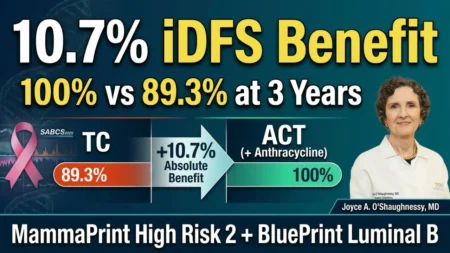
10.7% iDFS benefit with MammaPrint BluePrint anthracycline: FLEX trial shows 100% vs 89.3% 3-year survival in High Risk 2 Luminal B HR+ HER2- breast cancer with ACT versus TC. Featured Joyce A. O’Shaughnessy, MD and 2026 NCCN Guidelines.

10.7% 3-yr iDFS Absolute Benefit with Anthracycline in MammaPrint High Risk 2 HR+/ HER2- Breast Cancer – FLEX Study Shows

Breast Cancer 5 Mins Read
Dr. Joshua G. Cohen, MD, City of Hope - 2026 Cancer Breakthroughs at MOASC Summit

2026 Cancer Breakthroughs: Dr. Joshua Cohen’s Top Takeaways from the MOASC Summit

Breast Cancer 4 Mins Read
Connect With Us on Social
  • Facebook
  • Twitter
  • LinkedIn
  • YouTube

Latest FDA Oncology Updates

Accepted for Review Oncology Press Release

FDA Accepts NDA for TLX101-Px (Pixclara®) - PR Newswire

FDA Accepts NDA for TLX101-Px (Pixclara®). (PRNewsfoto/Telix Pharmaceuticals ... cancer), and has assigned a PDUFA goal date of September 11, 2026 ...

Filed: Sep 11, 2026 View source on FDA.gov →
ODAC Meeting Oncology FDA ODAC

April 30, 2026: Meeting of the Oncologic Drugs Advisory Committee

Event Title. April 30, 2026: Meeting of the Oncologic Drugs Advisory Committee Meeting Announcement. April 30, 2026 · On This Page · Agenda · Meeting Materials.

Meeting: Apr 30, 2026 View source on FDA.gov →
PDUFA Date Oncology Press Release

Savara Announces the U.S. Food & Drug Administration (FDA) Has ...

Such statements include, but are not limited to, statements related to the target PDUFA action date. Savara may not actually achieve any of the matters ...

View source on FDA.gov →
Approval Heme FDA OCE

FDA approves nivolumab with chemotherapy for Hodgkin lymphoma

This review was conducted under Project Orbis, an initiative of the FDA Oncology Center of Excellence. Project Orbis provides a framework for concurrent ...

View source on FDA.gov →
News Oncology FDA OCE

FDA Oncology Center of Excellence Presents Conversations on ...

FDA Oncology Center of Excellence Presents Conversations on Cancer: Oncology Nurses - Frontliners in Oncology May 6, 2026.

View source on FDA.gov →
News Oncology FDA OCE

FDA Schedules Public Meeting on the Commissioner's National ...

... Oncology Center of Excellence, as well as a presiding officer. Requests to speak are due by April 24 at 11:59 p.m. The FDA is also soliciting written ...

View source on FDA.gov →
Approval GYN FDA.gov

FDA approves relacorilant with nab-paclitaxel for platinum-resistant epithelial ovarian, fallopian tube, or primary peritoneal cancer

On March 25, 2026, the Food and Drug Administration approved relacorilant (Lifyorli, Corcept Therapeutics Inc.), a glucocorticoid receptor antagonist, in combination with nab-paclitaxel for the treatment of adults with platinum-resistant epithelial ovarian, fallopian tube, or primary peritoneal cancer who have received one to three prior systemic treatment regimens, at least one of which included bevacizumab.

Approved: Mar 25, 2026 View source on FDA.gov →
Approval Heme FDA.gov

FDA approves nivolumab with chemotherapy for previously untreated Hodgkin lymphoma

On March 20, 2026, the Food and Drug Administration approved nivolumab (Opdivo, Bristol Myers Squibb Company) with doxorubicin, vinblastine, and dacarbazine (AVD) for adult and pediatric patients 12 years and older with previously untreated, Stage III or IV classical Hodgkin lymphoma (cHL).

Approved: Mar 20, 2026 View source on FDA.gov →
Recent Posts
  • Does QHS-5132 Signal a Biomarker-Agnostic Shift in Ovarian Cancer Treatment?
  • Is Alisertib the New Standard for Overcoming Resistance in KRAS G12C-Mutant NSCLC?
  • Can Zoldonrasib Redefine Treatment for KRAS G12D NSCLC?
  • Are We Under-Treating PE in Cancer Patients?
  • Is MammaPrint High Risk the New Standard for Guiding Immunotherapy?
X (Twitter) LinkedIn Facebook YouTube
  • FDA
  • Conferences
    • AACR
    • ASBRS
    • ASCO
    • SABCS
    • ASH
    • ESMO
    • MOASC
    • Upcoming Oncology Conferences
  • Cancers
    • Breast Cancer
    • Prostate Cancer Treatment
    • Lung Cancer Treatment
    • Gastrointestinal Cancer Treatment
    • Melanoma Skin Cancer Treatment
    • Non-Hodgkin Lymphoma
    • Kidney
    • Acute Lymphoblastic Leukemia
    • Acute Myelogenous Leukemia
    • Bone Metastases
    • Brain
    • Business Management
    • Cervical
    • Chronic Lymphocytic Leukemia
    • Chronic Myelogenous Leukemia
    • Colorectal
    • COVID-19
    • General
    • Genitourinary
    • Head and Neck
    • Help
    • Hematologic Malignancies
    • Hodgkin Lymphoma
    • Imaging
    • Immunotherapy
    • Liver
    • Lymphoma
    • Multiple Myeloma
    • Myeloproliferative Disease
    • News
    • Non-Small Cell Lung Cancer
    • Other
    • Ovarian
    • Pancreatic
    • Patient Resources
    • Pediatric
    • Sarcoma
    • Sickle Cell
    • Small Cell Lung Cancer
    • Supportive Care
    • Testicular
    • Urology
    • Uterine
  • About
  • Contact
  • Advertise
    • Advertising & Services – Media Kit 2025 OncologyTube.com
    • Oncology Press Release Distribution
© 2026 Copyright Protected Medicus Networks, Inc. Privacy Policy

Type above and press Enter to search. Press Esc to cancel.