Close Menu
  • FDA
  • Conferences
    • AACR
    • ASBRS
    • ASCO
    • SABCS
    • ASH
    • ESMO
    • MOASC
    • Upcoming Oncology Conferences
  • Cancers
    • Breast Cancer
    • Prostate Cancer Treatment
    • Lung Cancer Treatment
    • Gastrointestinal Cancer Treatment
    • Melanoma Skin Cancer Treatment
    • Non-Hodgkin Lymphoma
    • Kidney
    • Acute Lymphoblastic Leukemia
    • Acute Myelogenous Leukemia
    • Bone Metastases
    • Brain
    • Business Management
    • Cervical
    • Chronic Lymphocytic Leukemia
    • Chronic Myelogenous Leukemia
    • Colorectal
    • COVID-19
    • General
    • Genitourinary
    • Head and Neck
    • Help
    • Hematologic Malignancies
    • Hodgkin Lymphoma
    • Imaging
    • Immunotherapy
    • Liver
    • Lymphoma
    • Multiple Myeloma
    • Myeloproliferative Disease
    • News
    • Non-Small Cell Lung Cancer
    • Other
    • Ovarian
    • Pancreatic
    • Patient Resources
    • Pediatric
    • Sarcoma
    • Sickle Cell
    • Small Cell Lung Cancer
    • Supportive Care
    • Testicular
    • Urology
    • Uterine
  • About
  • Contact
  • Advertise
    • Advertising & Services – Media Kit 2025 OncologyTube.com
    • Oncology Press Release Distribution
Advertisement
X (Twitter) LinkedIn Facebook
X (Twitter) LinkedIn Facebook YouTube
OncologyTube
  • FDA
  • Conferences
    • AACR
    • ASBRS
    • ASCO
    • SABCS
    • ASH
    • ESMO
    • MOASC
    • Upcoming Oncology Conferences
  • Cancers
    • Breast Cancer
    • Prostate Cancer Treatment
    • Lung Cancer Treatment
    • Gastrointestinal Cancer Treatment
    • Melanoma Skin Cancer Treatment
    • Non-Hodgkin Lymphoma
    • Kidney
    • Acute Lymphoblastic Leukemia
    • Acute Myelogenous Leukemia
    • Bone Metastases
    • Brain
    • Business Management
    • Cervical
    • Chronic Lymphocytic Leukemia
    • Chronic Myelogenous Leukemia
    • Colorectal
    • COVID-19
    • General
    • Genitourinary
    • Head and Neck
    • Help
    • Hematologic Malignancies
    • Hodgkin Lymphoma
    • Imaging
    • Immunotherapy
    • Liver
    • Lymphoma
    • Multiple Myeloma
    • Myeloproliferative Disease
    • News
    • Non-Small Cell Lung Cancer
    • Other
    • Ovarian
    • Pancreatic
    • Patient Resources
    • Pediatric
    • Sarcoma
    • Sickle Cell
    • Small Cell Lung Cancer
    • Supportive Care
    • Testicular
    • Urology
    • Uterine
  • About
  • Contact
  • Advertise
    • Advertising & Services – Media Kit 2025 OncologyTube.com
    • Oncology Press Release Distribution
Subscribe
OncologyTube
Home » ASCO » FGFR2 Mutations and IDH1 Real-World Data Suggests Caution with Immunotherapy in Specific mBTC – ASCO GI Dr. Richard Kim, MD Moffitt Cancer Center
Gastrointestinal Cancer Treatment

FGFR2 Mutations and IDH1 Real-World Data Suggests Caution with Immunotherapy in Specific mBTC – ASCO GI Dr. Richard Kim, MD Moffitt Cancer Center

EditorBy EditorJanuary 30, 2025Updated:March 26, 2025No Comments3 Mins Read
Twitter LinkedIn Facebook Email
Share
Twitter LinkedIn Facebook Email

Ask about FDA oncology approvals, clinical trials, and treatment guidelines.


In the rapidly evolving field of cancer treatment, the application of comprehensive genomic profiling (CGP) via liquid biopsy has become a pivotal tool for tailoring therapies in metastatic biliary tract cancer (mBTC). A recent study using real-world data from the GuardantINFORM database sheds light on the effectiveness of first-line treatments in patients with specific genetic mutations.

Background:

Historically, the first-line treatment for mBTC has been gemcitabine-cisplatin (GemCis) with or without immunotherapy (IO), such as durvalumab or pembrolizumab. However, this study questions the universal applicability of this approach, particularly for patients with IDH1 mutations or FGFR2 fusions.

Study Insights:

The research analyzed outcomes for mBTC patients with IDH1+ or FGFR2+ mutations treated with either GemCis alone or GemCis combined with IO. Here are some key findings:

  • IDH1 Mutations: Patients treated with GemCis alone showed a significantly higher real-world overall survival (rwOS) compared to those treated with GemCis+IO (27.2 months vs. 16 months; HR=0.4, p<0.001).
  • FGFR2 Fusions: Similarly, in patients with FGFR2 fusions, adding IO to GemCis appeared detrimental, with a notable decrease in rwOS (HR=0.37, p=0.005).

Quotes from Dr. Richard Kim. MD – Moffitt Cancer Center:

  • “In clinical practice, as you know, a lot of tumors have aberrations, including FGF fusion and IDH mutation. That’s why doing NGS profiling of tumors is very important.”
  • “Based on our data result, there may be actually a detriment of using immunotherapy in the first-line setting, in the patients who are IDH1 mutant or FGFR2 fusion.”

What This Means for Clinicians: The study suggests that the tumor microenvironment in patients with these specific mutations might not be conducive to immunotherapy benefits. “The microenvironment of IDH1 mutant or FGFR2 fusion are different,” highlighting a potential immune desert scenario where immunotherapy might not be beneficial or could even be harmful.

Conclusion: This real-world evidence calls for a more personalized approach in mBTC treatment. Although these findings are hypothesis-generating and require validation through prospective clinical trials, they urge caution in the routine addition of immunotherapy for all mBTC patients. The data supports using ctDNA CGP to guide initial treatment choices and possibly reconsidering the role of targeted therapies earlier in the treatment pathway.

Call to Action: Clinicians should consider these findings when planning treatment strategies and engage in further research to validate and expand upon these observations. This could lead to more effective, tailored therapies that enhance patient outcomes while minimizing unnecessary risks.

Note: These results are retrospective and should be considered as a starting point for further clinical research rather than a basis for immediate clinical decision-making.

This post aims to stimulate discussion and further research rather than to prescribe specific clinical actions without additional confirmatory studies.

Related Articles:
Differences in Early-Onset vs. Average-Onset Cholangiocarcinoma: Therapeutic Insights

https://meetings.asco.org/abstracts-presentations/241586

ASCO ASCO GI 2025 ascogi Cancer Treatment clinical insights Dr. Ricahrd Kim FGFR2 mutations genetic profiling IDH1 immunotherapy mBTC metastatic biliary tract cancer oncology Personalized Medicine precision oncology real-world data Richard Kim targeted therapy
Follow on X (Twitter) Follow on LinkedIn Follow on Facebook Follow on Google News
Share. Twitter LinkedIn Facebook Email

Related Posts

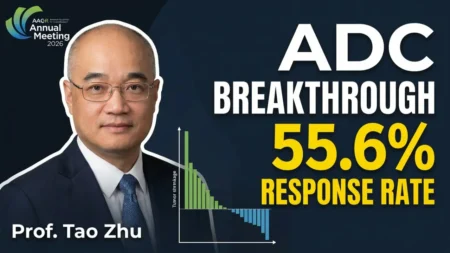
Prof. Tao Zhu presenting AACR 2026 data on QHS-5132, showing a 55.6% response rate and a waterfall plot of tumor shrinkage for platinum-resistant ovarian cancer.

Does QHS-5132 Signal a Biomarker-Agnostic Shift in Ovarian Cancer Treatment?

AACR 3 Mins Read
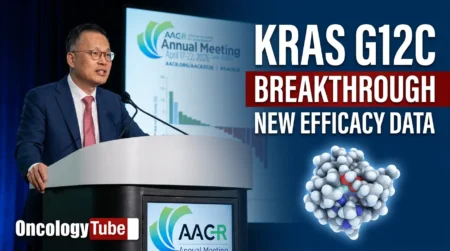
Dr. Byoung Chul Cho speaking at a podium during the AACR Annual Meeting 2026, presenting new efficacy data for KRAS G12C inhibitor alisertib (elisrasib).

Is Alisertib the New Standard for Overcoming Resistance in KRAS G12C-Mutant NSCLC?

AACR 4 Mins Read
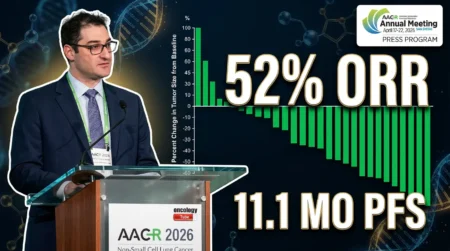
Dr. Jonathan W. Riess presenting zoldonrasib KRAS G12D NSCLC Phase 1 results at AACR 2026 showing 52 percent ORR and 11.1 months PFS

Can Zoldonrasib Redefine Treatment for KRAS G12D NSCLC?

AACR 5 Mins Read
Connect With Us on Social
  • Facebook
  • Twitter
  • LinkedIn
  • YouTube

Latest FDA Oncology Updates

Accepted for Review Oncology Press Release

FDA Accepts NDA for TLX101-Px (Pixclara®) - PR Newswire

FDA Accepts NDA for TLX101-Px (Pixclara®). (PRNewsfoto/Telix Pharmaceuticals ... cancer), and has assigned a PDUFA goal date of September 11, 2026 ...

Filed: Sep 11, 2026 View source on FDA.gov →
ODAC Meeting Oncology FDA ODAC

April 30, 2026: Meeting of the Oncologic Drugs Advisory Committee

Event Title. April 30, 2026: Meeting of the Oncologic Drugs Advisory Committee Meeting Announcement. April 30, 2026 · On This Page · Agenda · Meeting Materials.

Meeting: Apr 30, 2026 View source on FDA.gov →
PDUFA Date Oncology Press Release

Savara Announces the U.S. Food & Drug Administration (FDA) Has ...

Such statements include, but are not limited to, statements related to the target PDUFA action date. Savara may not actually achieve any of the matters ...

View source on FDA.gov →
Approval Heme FDA OCE

FDA approves nivolumab with chemotherapy for Hodgkin lymphoma

This review was conducted under Project Orbis, an initiative of the FDA Oncology Center of Excellence. Project Orbis provides a framework for concurrent ...

View source on FDA.gov →
News Oncology FDA OCE

FDA Oncology Center of Excellence Presents Conversations on ...

FDA Oncology Center of Excellence Presents Conversations on Cancer: Oncology Nurses - Frontliners in Oncology May 6, 2026.

View source on FDA.gov →
News Oncology FDA OCE

FDA Schedules Public Meeting on the Commissioner's National ...

... Oncology Center of Excellence, as well as a presiding officer. Requests to speak are due by April 24 at 11:59 p.m. The FDA is also soliciting written ...

View source on FDA.gov →
Approval GYN FDA.gov

FDA approves relacorilant with nab-paclitaxel for platinum-resistant epithelial ovarian, fallopian tube, or primary peritoneal cancer

On March 25, 2026, the Food and Drug Administration approved relacorilant (Lifyorli, Corcept Therapeutics Inc.), a glucocorticoid receptor antagonist, in combination with nab-paclitaxel for the treatment of adults with platinum-resistant epithelial ovarian, fallopian tube, or primary peritoneal cancer who have received one to three prior systemic treatment regimens, at least one of which included bevacizumab.

Approved: Mar 25, 2026 View source on FDA.gov →
Approval Heme FDA.gov

FDA approves nivolumab with chemotherapy for previously untreated Hodgkin lymphoma

On March 20, 2026, the Food and Drug Administration approved nivolumab (Opdivo, Bristol Myers Squibb Company) with doxorubicin, vinblastine, and dacarbazine (AVD) for adult and pediatric patients 12 years and older with previously untreated, Stage III or IV classical Hodgkin lymphoma (cHL).

Approved: Mar 20, 2026 View source on FDA.gov →
Recent Posts
  • Does QHS-5132 Signal a Biomarker-Agnostic Shift in Ovarian Cancer Treatment?
  • Is Alisertib the New Standard for Overcoming Resistance in KRAS G12C-Mutant NSCLC?
  • Can Zoldonrasib Redefine Treatment for KRAS G12D NSCLC?
  • Are We Under-Treating PE in Cancer Patients?
  • Is MammaPrint High Risk the New Standard for Guiding Immunotherapy?
X (Twitter) LinkedIn Facebook YouTube
  • FDA
  • Conferences
    • AACR
    • ASBRS
    • ASCO
    • SABCS
    • ASH
    • ESMO
    • MOASC
    • Upcoming Oncology Conferences
  • Cancers
    • Breast Cancer
    • Prostate Cancer Treatment
    • Lung Cancer Treatment
    • Gastrointestinal Cancer Treatment
    • Melanoma Skin Cancer Treatment
    • Non-Hodgkin Lymphoma
    • Kidney
    • Acute Lymphoblastic Leukemia
    • Acute Myelogenous Leukemia
    • Bone Metastases
    • Brain
    • Business Management
    • Cervical
    • Chronic Lymphocytic Leukemia
    • Chronic Myelogenous Leukemia
    • Colorectal
    • COVID-19
    • General
    • Genitourinary
    • Head and Neck
    • Help
    • Hematologic Malignancies
    • Hodgkin Lymphoma
    • Imaging
    • Immunotherapy
    • Liver
    • Lymphoma
    • Multiple Myeloma
    • Myeloproliferative Disease
    • News
    • Non-Small Cell Lung Cancer
    • Other
    • Ovarian
    • Pancreatic
    • Patient Resources
    • Pediatric
    • Sarcoma
    • Sickle Cell
    • Small Cell Lung Cancer
    • Supportive Care
    • Testicular
    • Urology
    • Uterine
  • About
  • Contact
  • Advertise
    • Advertising & Services – Media Kit 2025 OncologyTube.com
    • Oncology Press Release Distribution
© 2026 Copyright Protected Medicus Networks, Inc. Privacy Policy

Type above and press Enter to search. Press Esc to cancel.