


Tarlatamab Phase 3 Results SCLC ASCO 2025
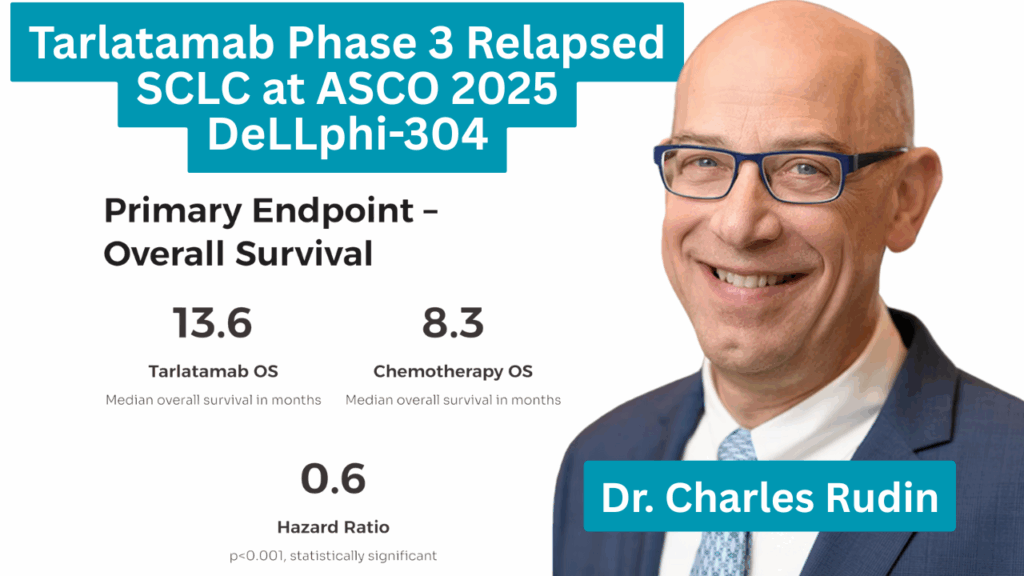
The tarlatamab phase 3 results for SCLC, shared at ASCO 2025, showed a notable improvement in survival. Tarlatamab achieved a median overall survival (mOS) of 13.6 months compared to 8.3 months with chemotherapy. The hazard ratio (HR) was 0.6, with a p-value less than 0.001, indicating statistical significance. At 12 months from randomization, 62% of tarlatamab patients were alive, compared to 37% in the chemotherapy group.
Overview of the DeLLphi-304 Study Design
The DeLLphi-304 study is a randomized, controlled phase 3 trial that enrolled 509 patients with relapsed SCLC. Patients were required to have progressed after platinum-based chemotherapy and have an ECOG performance status of 0 to 1. The trial compared tarlatamab (n=254), a DLL3-targeting T-cell engager, to standard chemotherapy (n=255), with overall survival as the primary endpoint. Secondary endpoints included objective response, disease control, and duration of response.
Tarlatamab Phase 3 Results: Survival Outcomes at ASCO 2025
The tarlatamab phase 3 results for SCLC, shared at ASCO 2025, showed a notable improvement in survival. Tarlatamab achieved a median overall survival (mOS) of 13.6 months compared to 8.3 months with chemotherapy. The hazard ratio (HR) was 0.6, with a p-value less than 0.001, indicating statistical significance. At 12 months from randomization, 62% of tarlatamab patients were alive, compared to 37% in the chemotherapy group.
SCLC Quality of Life Benefits from Tarlatamab at ASCO 2025
The tarlatamab phase 3 results also highlighted benefits in secondary endpoints. Objective response, disease control, and duration of response all favored tarlatamab over chemotherapy. Patients on tarlatamab reported improved quality of life, with reductions in dyspnea and cough symptoms. These outcomes are critical for SCLC patients, who often face significant symptom burden after relapse.
Safety Profile of Tarlatamab in Relapsed SCLC
Tarlatamab demonstrated a favorable safety profile in the DeLLphi-304 study at ASCO 2025. Grade 3 or higher treatment-related adverse events (TRAEs) occurred in 27% of tarlatamab patients, compared to 62% in the chemotherapy group. Common issues with chemotherapy included neutropenia, while tarlatamab patients experienced some cytokine release syndrome. These findings suggest tarlatamab may offer a safer option for relapsed SCLC treatment.
Global Impact and Clinical Implications
The tarlatamab phase 3 results for SCLC at ASCO 2025 have global implications. The study included patients from the US, Europe, Japan, and South Korea, reflecting a broad effort in SCLC research. After 30 years of limited progress, tarlatamab establishes a new standard of care for relapsed SCLC, as noted by Dr. Charles Rudin and the Memorial Sloan Kettering team. This shift could influence future trial designs and treatment protocols worldwide.
Learn More About Tarlatamab and ASCO 2025
For more details on the tarlatamab phase 3 results for SCLC at ASCO 2025, visit ASCO.org. The DeLLphi-304 study offers valuable insights for oncology professionals seeking to improve outcomes in relapsed SCLC. Stay updated on the latest lung cancer research and clinical trials through OncologyTube.com.
Related Links: