


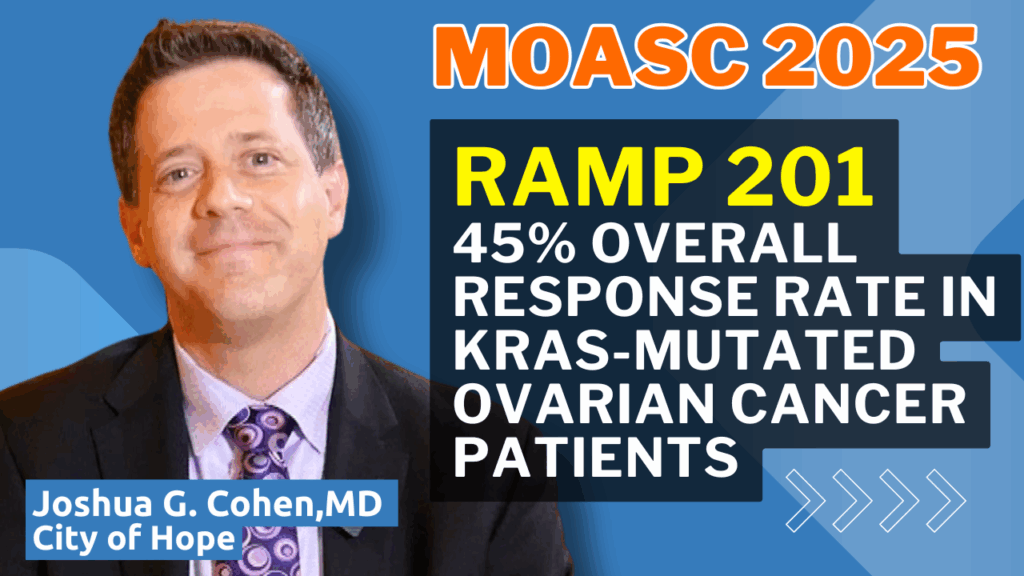
At the MOASC Spotlight 2025, Dr. Joshua G. Cohen, M.D., F.A.C.O.G., F.A.C.S., Medical Director of the Gynecologic Cancer Program at City of Hope Orange County, shared transformative updates on ovarian cancer treatment advancements. His presentation highlighted novel therapies, surgical strategies, and molecular testing that are reshaping care for patients with ovarian cancer. Below, we summarize key insights for medical professionals and patients, featuring critical findings from recent trials.
Breakthroughs in Low-Grade Serous Ovarian Cancer
Low-grade serous ovarian cancer is notoriously resistant to traditional chemotherapies. Dr. Cohen emphasized, “The new combination of abibittnib and deactnib represents really a first in class novel combination to treat patients with low grade cos ovarian cancer”. The RAMP 301 trial showed, “a significant benefit in KRAS mutated patients”, offering a targeted therapy for this rare subtype. Clinicians should prioritize molecular testing to identify KRAS mutations, while patients gain hope from this new option.
Relacorilant: A New Pathway for Platinum-Resistant Cases
For patients no longer responding to platinum-based chemotherapy, Relacorilant introduces a novel approach. Dr. Cohen noted, “Relacorilant’s a new class that is a selective receptor antagonist for glucricoid receptors”. He added, “Significant overall survival benefit for treating patients with Relacorilant in combination with a chemotherapy called a Braxine”. This new drug class provides a critical option for a challenging population, exciting oncologists and patients alike.
Optimal Surgery: Insights from the TRUST Trial
The TRUST trial clarified the importance of surgical expertise in stage III/IV ovarian cancer. Dr. Cohen stated, “The better the surgery, the better the outcome”. He further emphasized, “You want a gynecological incologist, someone like me involved in your surgery to remove as much of the cancer as possible”. Whether surgery or chemotherapy comes first, a gynecologic oncologist’s involvement is crucial. Patients should seek specialized care, and oncologists should collaborate with surgical experts.
PARP Inhibitors: Revolutionizing Initial Treatment
PARP inhibitors remain a cornerstone of ovarian cancer care. Dr. Cohen highlighted, “We may be curing some patients who might not otherwise have been cured” with PARP inhibitors in HRD-positive or BRCA1/2-positive patients. He stressed, “The best time to give carp inhibitors is in the initial management of ovarian cancer”. Patients should discuss molecular testing with their doctors, and clinicians must test for HRD/BRCA signatures to optimize outcomes.
Join MOASC to Stay Ahead in Oncology
The MOASC Spotlight 2025, hosted by the Medical Oncology Association of Southern California, is a premier platform for sharing cutting-edge research like Dr. Cohen’s. By joining MOASC, medical professionals and advocates connect with a network dedicated to advancing oncology through education and collaboration. Join MOASC today to stay at the forefront of cancer care.