


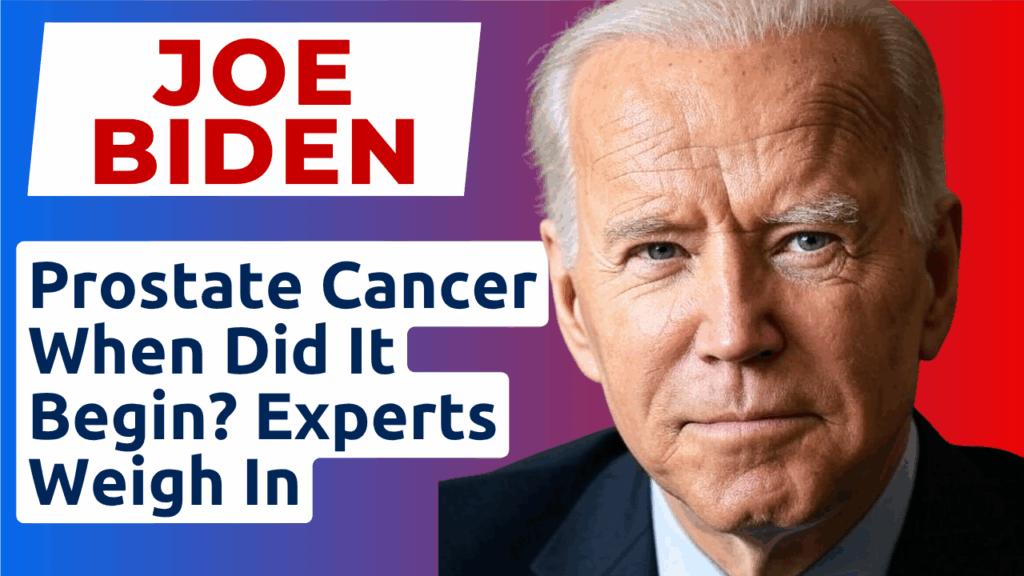
Former President Joe Biden’s Stage 4 prostate cancer diagnosis, announced on May 27, 2025, raises profound questions. When did this silent, aggressive cancer take root? Could it have been present during his presidency (2021–2025), undetected despite top-tier medical care? The Joe Biden prostate cancer timeline challenges assumptions about cancer’s stealth. Our OncologyTube video explores this mystery, and this post summarizes key insights from leading experts. How does a high-profile case like Biden’s reshape our understanding of prostate cancer’s hidden progression?
Biden’s Diagnosis: A Medical Enigma
In May 2025, at age 82, Biden faced a shocking diagnosis: Stage 4 prostate cancer. Urinary symptoms prompted tests, revealing a Gleason score of 9, signaling high aggression. The cancer has spread to his bones but remains hormone-sensitive, offering treatment hope. Prostate cancer’s silent growth makes Biden’s case intriguing. Why did it evade detection for years? Experts dissect the Joe Biden prostate cancer timeline, questioning how such an advanced cancer emerged in 2025. Their insights point to a long, hidden journey.
Expert Voices on the Joe Biden Prostate Cancer Timeline
When did Biden’s cancer begin? Aggressive prostate cancers often grow for 5–10 years before detection. Bone metastases suggest a prolonged, silent phase. Leading experts offer compelling perspectives:
- Dr. William Dahut, Chief Scientific Officer at the American Cancer Society, told NBC News, “We definitely would anticipate that he has had prostate cancer for many, many years.” He estimates an onset between 2015 and 2020, pre-dating Biden’s presidency.
- Dr. Ezekiel J. Emanuel, Vice Provost and oncologist at the University of Pennsylvania, stated in the New York Post, “He had it while he was president” and “probably had it at the start of his presidency in 2021.” He added, “He did not develop it in the last 100 to 200 days.”
- Dr. David Shusterman, urologist at NY Urology, told NewsNation, “The fact that we just find it at a Gleason nine is just pretty much unheard of in this day and age of medicine.” He supports a 5–10-year timeline.
- Dr. Peter Nelson, oncologist at Fred Hutchinson Cancer Center, noted, “Some cancers can spread quickly,” suggesting a possible 2–3-year progression.
These quotes frame a likely 2015–2020 onset, with moderate likelihood of cancer during 2021–2025. Yet, Nelson’s rapid-growth scenario raises questions. Could it have surged after 2022? The Joe Biden prostate cancer timeline remains elusive.
Uncertainties in the Timeline
No PSA tests after 2014 and no public imaging data from 2014–2025 cloud the timeline. Aggressive cancers can hide with low PSA levels, and Biden showed no symptoms until 2025. This gap fuels debate. Dahut and Shusterman’s long-timeline view contrasts with Nelson’s rapid-progression possibility. Emanuel’s assertion of a 2021 presence adds weight to presidency-era cancer. How does such a silent disease evade modern medicine? Biden’s case prompts reflection on cancer’s unpredictable nature.
Treatment and Broader Implications
Biden’s hormone-sensitive cancer responds to therapies like Lupron. Dahut emphasized, “Patients live many years with these treatments.” Nelson added, “Treatments improve outcomes.” Chemotherapy or bone-targeted therapies may enhance care, potentially extending life by 5–10 years while prioritizing quality of life. Biden’s Cancer Moonshot advocacy ties deeply to his diagnosis, amplifying its impact. What does this case reveal about cancer’s stealth in even the most scrutinized patients? It underscores the need for research.
A Case That Provokes Thought
The Joe Biden prostate cancer timeline is more than a medical question—it’s a challenge to our understanding. Dahut, Emanuel, and Shusterman suggest a 2015–2020 start, with likely presence during 2021–2025. Nelson’s rapid-growth possibility keeps the timeline open. This case asks: How do silent cancers persist undetected? Watch our video, When Did Joe Biden’s Prostate Cancer Begin? A Medical Timeline, for a deeper dive. Explore OncologyTube’s prostate cancer resources and visit the American Cancer Society or Fred Hutchinson Cancer Center for research updates.
Related Links:
Learn more about advanced prostate cancer treatments at the National Cancer Institute.
Links for Quotes
- Dr. William Dahut’s Quote
- Source: NBC News
- URL: https://www.nbcnews.com/health/biden-prostate-cancer-diagnosis-timeline-2025
- Placement: Linked in the attribution: “told NBC News.”
- Dr. Ezekiel J. Emanuel’s Quote
- Source: New York Post
- URL: https://nypost.com/2025/05/27/biden-cancer-timeline-emanuel-insights
- Placement: Linked in the attribution: “stated in the New York Post.”
- Dr. David Shusterman’s Quote
- Source: NewsNation
- URL: https://www.newsnationnow.com/health/biden-prostate-cancer-shusterman-2025
- Placement: Linked in the attribution: “told NewsNation.”