




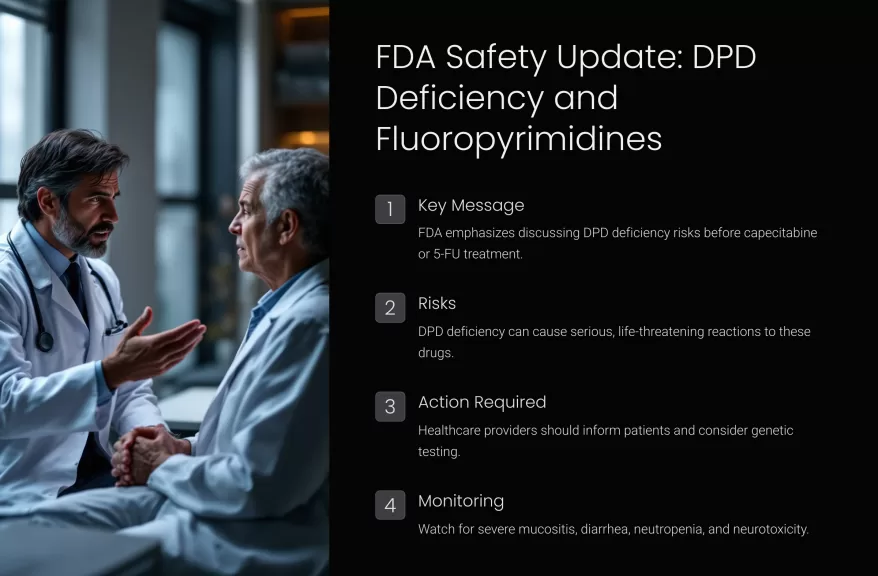
The U.S. Food and Drug Administration (FDA) has recently underscored the significance of understanding Dihydropyrimidine Dehydrogenase (DPD) deficiency in patients before initiating treatment with capecitabine or fluorouracil (5-FU). This announcement comes with updated safety labeling for these medications, which are common in chemotherapy regimens for various cancers.
Key Points from the FDA Announcement:
- DPD Deficiency Awareness: DPD deficiency affects how the body metabolizes these drugs, potentially leading to severe, life-threatening toxicities like mucositis, diarrhea, neutropenia, and neurotoxicity.
- Prevalence: It’s noted that about 3-5% of the White population carries a partial DPD deficiency, with around 0.2% having a complete deficiency, which can result in significant adverse reactions.
- New Labeling Updates:
- Warnings for Patients: Patients should be informed of the risks associated with DPD deficiency before starting treatment.
- Genetic Testing Recommended: Discussions about genetic testing for DPD variants are encouraged to mitigate risks.
- Dose Adjustments: No safe dose has been established for patients with complete DPD deficiency, and caution is advised for those with partial deficiency.
- Action for Healthcare Providers:
- Educate patients on the potential for severe adverse reactions.
- Consider testing for genetic variants associated with DPD deficiency before treatment initiation.
- Monitor for signs of toxicity and adjust treatment as necessary.
What This Means for Patients:
If you or a loved one is considering or currently undergoing treatment with capecitabine or 5-FU, it’s crucial to:
- Talk to Your Doctor: Discuss your risk for DPD deficiency and the implications it might have on your treatment plan.
- Be Informed: Understand the symptoms of toxicity and when to seek immediate medical attention.
- Genetic Screening: Ask if genetic testing for DPD deficiency is recommended for you.
Read More: For the full FDA announcement and detailed guidance, please visit the FDA’s official statement.
Engage & Discuss:
- Have you or someone you know faced challenges with these medications?
- What are your thoughts on genetic testing before starting cancer treatments?
Hashtags: FDASafetyAlert DPDDeficiency Capecitabine 5FU CancerTreatment GeneticTesting PatientSafety HealthcareEducation
Disclaimer: This post is for informational purposes only. Always consult with healthcare professionals for medical advice tailored to your situation.
Related Articles: