

Published: February 4, 2026
Author: Deepa Jeyakumar, MD, Clinical Professor in Medicine Hematology/Oncology, UC Irvine
Category: ASH 2025 | Hematology | MDS | Acute Lymphoblastic Leukemia | MOASC
Watch the Full Expert Interview
Video duration: ~2:30 minutes Speaker: Deepa Jeyakumar, MD – Hematology Specialist
Key Takeaways from ASH 2025 MDS/ALL Highlights
The 67th American Society of Hematology (ASH) Annual Meeting delivered targeted advances for difficult hematologic malignancies. For instance, Dr. Deepa Jeyakumar provides an MDS/ALL update focusing on cytopenia improvements, critical lessons from the negative Verona trial, the novel CLEVER pathway with minimal toxicity, and reduced-toxicity strategies for older acute lymphoblastic leukemia (ALL) patients.
As a result, these insights emphasize precision medicine and safer regimens. Therefore, clinicians can better select patients and explore innovative mechanisms. Moreover, the discussion highlights why broad trials sometimes fail where smaller, targeted ones succeed. Below are the main points explained clearly.
1. Promising Multi-Lineage Improvements in Refractory MDS
What Dr. Jeyakumar said: “What’s encouraging is that it looks like in addition to improving hemoglobin, it’s also improving the neutrophil count and platelet counts… And it’s attractive because some of these patients have already had the available therapies and had progressed through them.”
Key points:
- Boosts hemoglobin, neutrophils, and platelets
- Valuable next-line option for patients who failed prior therapies
Why it matters: In addition, these improvements reduce transfusion dependence and enhance quality of life. Consequently, this approach addresses a major unmet need in refractory MDS.
Blood cell illustration representing MDS treatment advances discussed at ASH 2025.
2. Verona Trial Lessons: Negative Results & Importance of Selection
What Dr. Jeyakumar said: “The Verona trial… compared ASA Venetoclax to ASA Placebo, which was disappointing… there were limitations… less blast count, older age, and some with better risk disease. So the benefit… was probably less in those patients.”
Key data:
| Aspect | Details | Outcome |
|---|---|---|
| Comparison | ASA + Venetoclax vs ASA + Placebo | No clear overall benefit |
| Limitations | Lower blasts, older age, better-risk disease | Reduced efficacy in enrolled population |
| Response Rates | Lower benefit without targeted selection | Negative primary endpoint |
Why it matters: For example, enrollment biases can mask subgroup benefits. Therefore, future trials should prioritize higher-risk patients to demonstrate true value.
Venetoclax for Untreated AML and High-Risk MDS – HealthTree for …
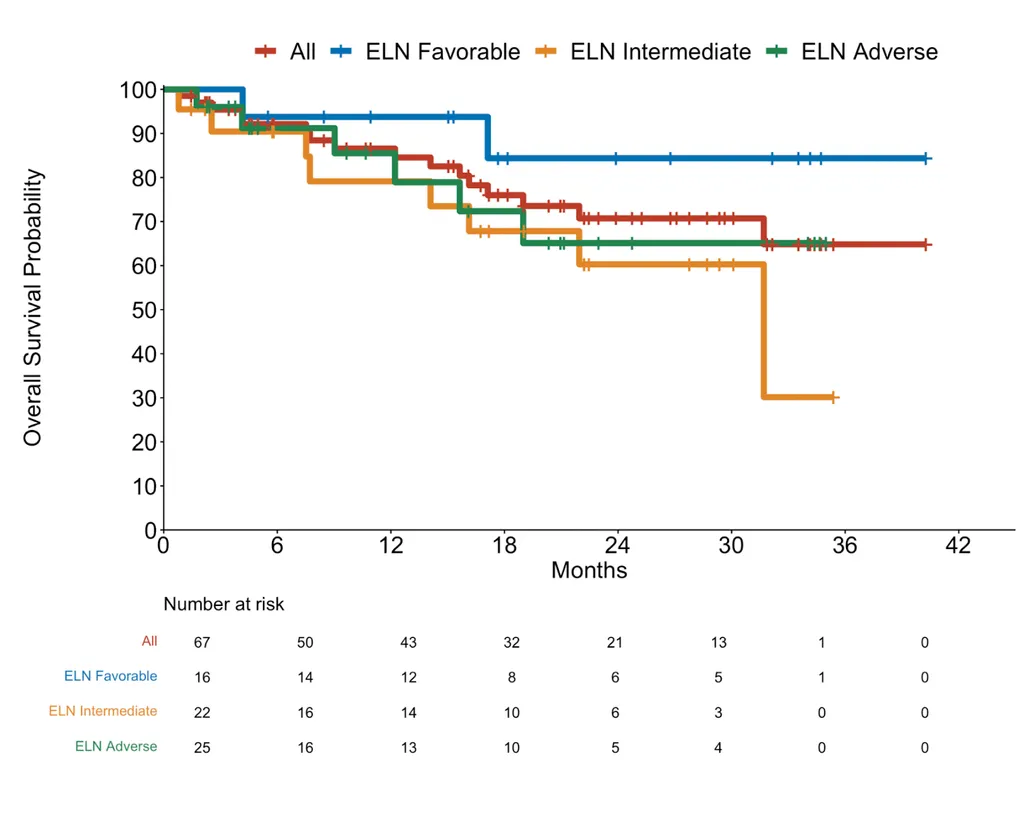
Survival curves from a related MDS/AML trial, illustrating risk stratification similar to Verona insights at ASH 2025.
Kaplan-Meier-style curves from related MDS/AML studies, illustrating risk-based insights similar to the Verona trial at ASH 2025.
3. Precision Patient Selection for ASA-Venetoclax Benefit
What Dr. Jeyakumar said: “Picking the right patient… you can derive a benefit, particularly in patients under the age of 75 with high risk cytogenetics and a higher blast count greater than 5%.”
Key subgroups:
- Age under 75
- High-risk cytogenetics
- Blast percentage >5%
Why it matters: In particular, this refined selection maximizes efficacy. Thus, it guides real-world practice beyond broad trial populations.
4. Challenges in Difficult-to-Treat Hematologic Diseases
What Dr. Jeyakumar said: “This is very difficult to treat disease… we’ve seen in four negative trials… these patients can do well in smaller trials. But when it comes to larger trials, there’s limited benefit.”
Key points:
- Extremely challenging (e.g., MDS/AML overlap syndromes)
- Four negative large-scale trials
- Promise in smaller studies vs. limited scalability in larger ones
Why it matters: As a result, innovative mechanisms are essential. Moreover, this pattern informs smarter trial design and endpoint selection.
ASH 2025 conference visual representing discussions on complex hematologic malignancies.
5. Novel CLEVER Pathway: First-in-Class with Low Toxicity
What Dr. Jeyakumar said: “This is a novel mechanism of action using the CLEVER pathway, which hasn’t been targeted before… looks like it doesn’t have a lot of side effects.”
Key highlights:
- Targets previously untapped CLEVER pathway
- Minimal toxicity profile
Why it matters: Consequently, this opens safer treatment avenues for frail or refractory patients. In addition, it represents a step forward in mechanism-based therapy development.
6. Chemo-Sparing Success in Older Acute Lymphoblastic Leukemia
What Dr. Jeyakumar said: “Older ALL patients… generally do poorly with chemotherapy… giving them inotuzumab, followed by blinatumomab… effective results… fewer deaths due to toxicity… overall, patients did better.”
Key findings:
- Sequential regimen: Inotuzumab followed by blinatumomab + cytarabine-based therapy
- Effective disease control
- Reduced treatment-related mortality
- Improved overall outcomes
Why it matters: For instance, older patients face high toxicity risks with standard chemo. Therefore, this approach offers better tolerability and efficacy.
Frontline Blinatumomab in Older Adults with Philadelphia …
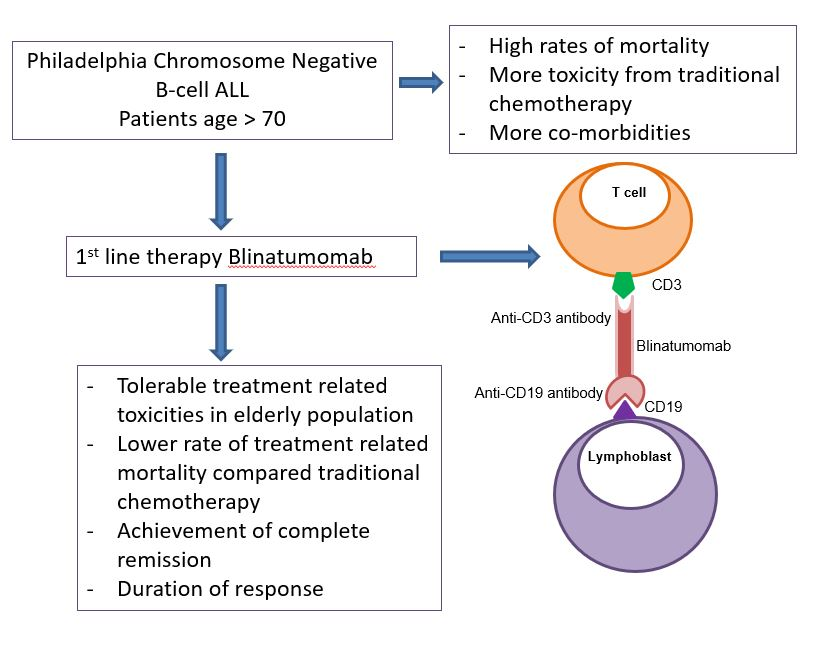
Diagram of blinatumomab mechanism in ALL, highlighting its role in older patient treatments at ASH 2025.
Blinatumomab mechanism diagram highlighting its role in older ALL treatment advances at ASH 2025.
Summary – Practice-Changing Insights from ASH 2025 MDS/ALL Highlights
| Topic | Key Advance at ASH 2025 | Likely Practice Impact |
|---|---|---|
| Refractory MDS | Multi-lineage blood count improvements | Next-line option for progressed patients |
| Verona Trial | Negative overall, but critical selection lessons | Prioritize <75 years, high-risk cytogenetics, >5% blasts |
| Difficult-to-Treat Diseases | Pattern of negative large trials | Need for refined trial design & novel mechanisms |
| CLEVER Pathway | First-in-class target with low toxicity | Safer therapies for high-risk hematology |
| Older ALL | Inotuzumab → blinatumomab sequence | Reduced toxicity, improved disease control & survival |
In summary, these ASH 2025 MDS/ALL highlights advance precision and tolerability. Therefore, better patient selection and innovative pathways will likely improve outcomes in challenging cases.
Stay Updated
Subscribe to Oncology Tube for more ASH 2025 coverage, expert interviews, and hematology/oncology insights.
Questions about these MDS/ALL updates? Leave a comment below – we’d love to hear from you.
Tags: ASH 2025, MDS/ALL highlights, Verona trial MDS, CLEVER pathway, older ALL treatment, Deepa Jeyakumar, myelodysplastic syndromes, acute lymphoblastic leukemia, hematology updates
Internal links:
External Links: