

Introduction This article provides an overview of the latest CLL treatment updates 2026.
In the rapidly evolving field of CLL treatment updates 2025, recent data from the American Society of Hematology (ASH) 2025 meeting have sparked significant discussions among oncologists. These updates focus on comparing time-limited regimens with continuous therapies for chronic lymphocytic leukemia (CLL). Moreover, they offer new options for patients. Presented by Dr. Allison Reichl from the University of California, Irvine, this video from MOASC Spotlight on Hematology delves into key trials like CLL17, BRUIN CLL-313, and BRUIN CLL-314. Whether you’re a healthcare professional or a patient seeking the latest insights, these CLL treatment updates 2025 highlight non-inferior outcomes. In addition, they cover reduced toxicities and potential shifts in standard care.
Watch the full video below for an in-depth analysis:
Why Time-Limited Regimens Are Gaining Traction in CLL Treatment Updates 2025
Time-limited therapies are emerging as a strong alternative in CLL treatment updates 2025, particularly for reducing long-term exposure to toxicities. As Dr. Reichl explains in the video, “what makes these time limited regimens, you know, a good choice for patients, as we’ve seen in the CLL 17 trial. There’s it’s not inferior to continuous treatments. And when you have a time limited treatment, you’re just less exposed to toxicities.”
From the CLL17 trial, a phase 3 randomized study published in the New England Journal of Medicine, fixed-duration venetoclax-obinutuzumab (VO) or venetoclax-ibrutinib (VI) showed non-inferior progression-free survival (PFS) compared to continuous ibrutinib. After a median follow-up of 34.2 months, 3-year PFS rates were 81.1% for VO, 79.4% for VI, and 81% for ibrutinib.
However, challenges exist. Dr. Reichl notes, “sometimes these regimens are a little bit harder to tolerate due to neutropenia, due to having to come in for infusions, for the veticlax ramp up.” Despite this, the benefits often outweigh the drawbacks. This is especially true for unfit patients.
Benefits for Unfit Patients
Unfit patients, those with comorbidities leading to treatment interruptions, may benefit most from time-limited approaches. According to Dr. Reichl, “we’re seeing that there’s more data, especially for our patients who are unfit and have a lot of treatment interruptions, that they might actually benefit from just trying to push them, push them through the time limited regimen.” CLL17 subgroup analysis supported this. Specifically, it showed better hazard ratios (HR 0.58 for VO vs ibrutinib, HR 0.66 for VI vs ibrutinib) in unfit groups.
Deep Dive into CLL17: Non-Inferiority and Long-Term Questions
The CLL17 trial, an investigator-initiated phase 3 study involving 909 patients across Europe, directly compared continuous ibrutinib with fixed-duration VO and VI. Dr. Reichl highlights, “We just have early data from the CLL 17 trial that shows that VI is basically non inferior to Irutnib thus far. Will the curves separate out in the future? I don’t know.”
Key findings include:
- Higher undetectable minimal residual disease (uMRD) rates with combinations: 73.3% for VO and 47.2% for VI in peripheral blood.
- Overall survival (OS) similar across arms (3-year OS: 91.5% VO, 96.0% VI, 95.7% ibrutinib).
- Infections were more common in VO due to neutropenia.
Dr. Reichl adds, “The addition of theetoclax to a BTK in inhibitor was also shown in that trial to have a higher rate of minimal undetectable minimal residual disease. Does that mean those patients will have a longer overall survival? I don’t know.”
Notably, VI is not FDA-approved in the US due to cardiovascular concerns, as Dr. Reichl states: “theet cybernib is not an approved regimen in the United States by the FDA, due to cardiovascular toxicity concerns. So it will probably be a calibru nib versus vet cl that physicians are commonly using.”
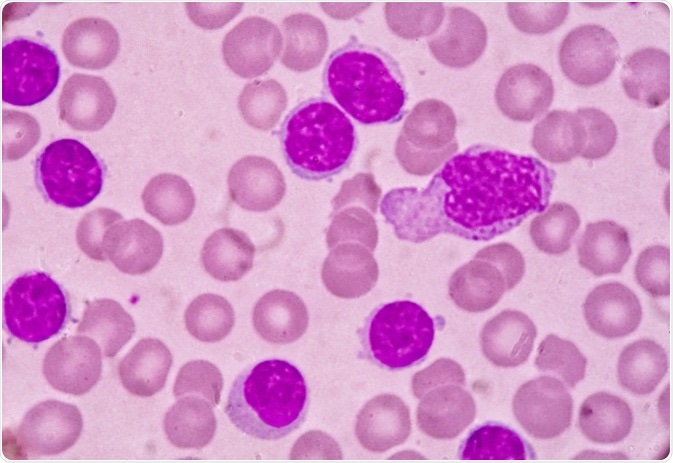
Chronic Lymphocytic Leukemia (CLL) Prognosis
Image: Chronic lymphocytic leukemia cells under a microscope, illustrating the disease’s cellular characteristics. Alt text: CLL cells under microscope for treatment updates 2025.
BRUIN CLL-313: Pirtobrutinib Shines in Treatment-Naïve CLL
Shifting to BRUIN CLL-313, presented at ASH 2025, this phase 3 trial compared pirtobrutinib (a non-covalent BTK inhibitor) to bendamustine plus rituximab (BR) in untreated CLL/SLL patients without del(17p). Dr. Reichl emphasizes the impressive results: “what we saw in the Bruin 313 trial… was a significant progressression free survival benefit with a hazard ratio of 0.20. So basically, we’re saying this is 80% better than the comparator arm.”
Highlights:
- 24-month PFS: 93.4% (pirtobrutinib) vs 70.7% (BR).
- OS trend favored pirtobrutinib (HR 0.26), despite 52.9% crossover.
- Higher infections with pirtobrutinib (57.1% vs 33.3%), but lower dose reductions (3.6% vs 31.1%).
Dr. Reichl cautions, “we don’t we’re not really using chemo unotherapy in the first line in the United States anymore.” She praises the cardiovascular profile: “main improvement that we see with perob brutinib is the decreased cardiovascular toxicity and rates of atral fibrillation.”
Sequencing Pirtobrutinib: Ongoing Discussions in CLL Treatment Updates 2025
Sequencing remains key in CLL treatment updates 2025. Dr. Reichl discusses, “Where Pertorutnib should be used in terms of sequencing therapy is an ongoing discussion, because if you use pertobrutnib first before the covalance, BTK inhibitors, you’re going to get basically resistance mutations, potentially that would also confer resistance to a continuous BTK inhibitor.”
For older patients, it could be ideal: “if you have, you know, a very old patient who doesn’t want to do time limited therapy perhaps, and that you think is only going to be on one line of therapy, maybe proto Brutnib will be kind of a first sign option for those patients.”
BRUIN CLL-314: Head-to-Head vs Ibrutinib
BRUIN CLL-314, the first randomized phase 3 trial comparing pirtobrutinib to ibrutinib in BTKi-naïve CLL/SLL, showed non-inferior overall response rates (ORR), with trends favoring pirtobrutinib. Dr. Reichl notes the safety edge. She states, “Atrial fibrillation / flutter with ibrutinib in the Alliance trial was 17% (ibrutinib) vs 3% (BendaR).” In BRUIN CLL-314, it was markedly lower at 2.4% for pirtobrutinib vs 13.5% for ibrutinib.
She concludes, “This may be an ideal treatment for OLDER patients who are only going to receive one therapy in their lifetime. Otherwise as a “salvage” therapy after development of a CYS481 mutation. Caution with using pirtobrutinib FIRST because if a patient develops intrinsic resistance to that medication, it will likely have resistance to covalent BTKI.”
Conclusion: Shaping the Future of CLL Care
These CLL treatment updates 2025 from ASH underscore a shift toward personalized, less toxic regimens. Time-limited options like VO/VI offer non-inferior PFS with fewer long-term risks, while pirtobrutinib provides a safer BTKi alternative. As Dr. Reichl urges, “a lot more researchcher needs to be done on part Oam.” Stay tuned for more from Oncology Tube (@oncologytube on X) as we cover evolving oncology advancements.
External Links:
For further reading: